
The Hidden Costs of 'Free' Judging: Why DIY Isn't Always Cheaper
We often assume doing it ourselves saves money, and in some cases, it absolutely does. But with event judging, that’s not always true. The temptation to handle judging in-house is strong, especially for smaller events, but you have to look beyond the zero-dollar price tag. Hidden expenses add up fast. I've found that time, lack of expertise, and bias often cost more than a service fee.
I want to be upfront: DIY can work, but it demands a realistic assessment of your team's capabilities. It's not just about having people willing to volunteer their time; it's about having people with the right skills and experience to evaluate submissions fairly and consistently. A poorly judged event can damage your reputation, leading to lower participation rates in the future.
Think about the sheer amount of coordination involved. Recruiting judges, training them on your criteria, collecting submissions, managing the scoring process, and handling potential disputes – it’s a lot. And that’s assuming everything goes smoothly. When it doesn’t, the time commitment skyrockets. It’s easy to underestimate the administrative burden.
Decoding Professional Judging Service Pricing: What Do You Actually Pay For?
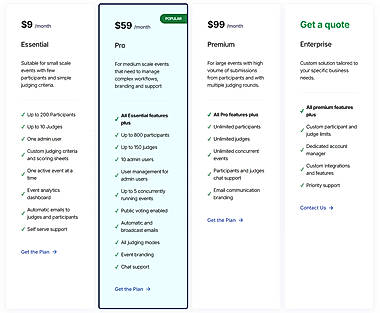
Judging services don't follow a single pricing model. Common pricing models include per submission (you pay a fixed amount for each entry judged), per judge hour (you pay for the time judges spend evaluating submissions), and a flat fee (a fixed price for the entire judging process). Judgify.me lists features like branding and promotion alongside judging management, suggesting a bundled cost is common.
What factors influence the cost? Event size is a big one – more submissions mean more judging hours. Judging complexity matters too. Evaluating a simple photo contest is less expensive than assessing a complex engineering design. The required expertise of the judges is also a factor; specialized knowledge commands higher rates. Finally, turnaround time plays a role; rush jobs will always cost more.
Expect to see pricing ranging from $5 to $50+ per submission, depending on these factors. Per-judge-hour rates typically fall between $30 and $150, and flat fees can vary from a few hundred dollars for small events to several thousand for larger, more complex competitions. Be sure to ask about hidden fees – setup costs, platform fees, or additional charges for dispute resolution.
The True Cost of In-House Judging: A Deep Dive
This section is where we really dissect the DIY approach. Let’s break down the costs into categories. First, staff time: planning the judging process, recruiting judges (which takes time!), training them, the actual judging itself, and handling any disputes that arise. Award Force emphasizes building fair judging criteria, which itself requires considerable staff effort.
Then there are software and tools. Even if you’re using spreadsheets, that’s staff time spent entering data and calculating scores. More sophisticated submission management and scoring systems can cost hundreds or even thousands of dollars per year. Score Judge focuses on fairness, which means investing in tools that support objective evaluation.
Don’t forget potential legal risks. Bias claims and fairness concerns can lead to disputes and even legal action. Having a clear, well-documented judging process – and potentially legal counsel – can mitigate these risks. Consider the opportunity cost, too: what else could your team be doing with that time? Could they be focusing on marketing, fundraising, or other revenue-generating activities?
Let’s put some numbers to it. Imagine a contest with 500 submissions. If each submission takes an average of 15 minutes to judge, that’s 125 hours of judging time. At $30/hour (a conservative estimate for skilled labor), that’s $3,750 in labor costs alone. Add in the cost of software, administrative overhead, and potential legal fees, and the DIY approach can quickly become more expensive than hiring a professional service.
- Staff Time: Planning, recruitment, training, judging, dispute resolution.
- Software/Tools: Submission management, scoring systems.
- Legal Risks: Bias claims, fairness concerns.
ROI Beyond Dollars: The Intangible Benefits of Professional Judging
It's easy to focus on price, but judging quality significantly impacts your event's reputation. A professional judging panel lends credibility to your event, attracting higher-quality submissions and more enthusiastic participants. Increased contestant satisfaction is a major benefit – people are more likely to return next year if they feel the judging was fair and impartial.
Reduced risk of disputes is another key advantage. Professional judges are trained to evaluate submissions objectively and to document their reasoning. This makes it much harder for contestants to challenge the results. A more efficient judging process saves you time and resources, allowing you to focus on other aspects of event management.
These intangible benefits can translate into long-term gains. Increased participation rates lead to higher revenue from entry fees. Improved event credibility attracts sponsorships. A positive reputation enhances your brand image. I think this is where the value proposition really shifts – it's not just about saving money; it's about investing in the success of your event.
Judging Service Features: What to Look for in 2026
The judging service market is evolving rapidly. In 2026, robust scoring systems will be table stakes. Look for platforms that offer customizable scoring rubrics, weighted criteria, and detailed reporting. Bias detection tools are becoming increasingly important, helping to ensure fairness and transparency.
Secure submission handling is also crucial. You need a platform that protects the confidentiality of submissions and prevents tampering. Integration with event management platforms streamlines the workflow and reduces administrative overhead. Options for blind judging – where judges don’t know the identity of the submitter – are essential for minimizing bias.
The growing trend of using AI to assist with preliminary screening is worth noting. AI can help identify submissions that meet basic eligibility criteria or flag potential plagiarism. However, it’s important to remember that AI should assist human judges, not replace them. Final judging decisions should always be made by qualified professionals.
Professional Event Judging Services vs. DIY: Feature Comparison (2026)
| Service Type | Blind Judging Implementation | Bias Detection Capabilities | AI-Powered Assistance | Platform Integration | Data Security |
|---|---|---|---|---|---|
| Professional Service | Typically Robust | Often Included | Growing Availability | Generally Strong | High |
| DIY (Spreadsheets/Basic Forms) | Manual Effort Required | Limited/None | Not Typically Available | Requires Significant Customization | Variable - User Responsibility |
| DIY (Dedicated Software - Small Scale) | Possible with careful setup | Limited/Requires Add-ons | Emerging Options | May integrate with basic event tools | Moderate - Dependent on Software |
| Professional Service (Budget-Focused) | Often Available | Basic Tools | Limited | Common Integrations | Standard |
| Professional Service (Enterprise) | Advanced Options | Sophisticated Analysis | Increasingly Common | Extensive API Access | Very High |
| DIY (Open Source Tools) | Possible, but complex | Requires coding/expertise | User-Implemented | Highly Customizable | Dependent on Implementation |
Qualitative comparison based on the article research brief. Confirm current product details in the official docs before making implementation choices.
Case Studies: DIY Successes and Failures (and What We Learned)
Real-world examples are always helpful. Let’s look at a small local photography contest. They successfully used a DIY approach by recruiting experienced photographers as judges, developing a clear scoring rubric, and using a free online survey tool to collect scores. Their success hinged on having highly qualified volunteer judges and a simple judging process.
Conversely, a larger regional film festival ran into problems when they relied on a small team of staff members to judge hundreds of submissions. The judging process was rushed, the criteria were subjective, and contestants complained about unfairness. They ended up hiring a professional judging service the following year.
A mid-sized marketing awards show attempted a hybrid approach – using in-house staff for preliminary screening and professional judges for final evaluations. This worked well, as it allowed them to leverage their internal expertise while ensuring fairness and objectivity in the final judging round. The key lesson? Knowing your limitations and being willing to seek outside help when needed.
Making the Decision: A Checklist for Evaluating Your Options
Time to put it all together. Here's a practical checklist to help you decide whether to go with a professional judging service or handle judging in-house. First, what’s your budget? Be realistic about the total cost of both options, including staff time and software expenses. How complex is the judging process? Does it require specialized expertise?
What’s the level of expertise required of the judges? Are you confident that you can recruit qualified volunteers? What’s your risk tolerance? Are you willing to accept the potential for bias claims and disputes? Finally, how important is the reputation of your event? A professional judging panel can significantly enhance your credibility.
If you answer 'yes' to most of these questions, a professional judging service is likely the best option. If you have a limited budget, a simple judging process, and access to qualified volunteers, DIY might be feasible. But remember to be honest with yourself about your capabilities and limitations.
- Budget: What’s your total budget for judging?
- Complexity: How complex is the judging process?
- Expertise: Can you recruit qualified judges?
- Risk Tolerance: Are you willing to accept potential disputes?
- Reputation: How important is the event's credibility?
Future Trends in Event Judging: What's on the Horizon?
The event judging landscape is constantly evolving. The potential impact of AI will continue to grow, with AI-powered tools assisting with preliminary screening and fraud detection. Blockchain technology could offer a secure and transparent way to record votes and verify judging results.
We’ll also see a growing demand for more transparent and equitable judging processes. Contestants will expect to see detailed scoring rubrics and clear explanations of judging criteria. The focus will be on fairness, objectivity, and accountability. I'm not predicting the future, but these are the areas to watch.
No comments yet. Be the first to share your thoughts!