
The shift to hybrid competitions
Hybrid events are no longer a backup plan. Most competitions now pair a physical venue with a digital stream to reach people who can't travel. Whether it's a science fair or a cooking contest, the goal is the same: more eyes on the participants without the limits of a single room.
Several factors are driving this trend. Accessibility is a big one; virtual participation allows individuals who might not be able to travel to still compete or judge. Cost savings are also significant, both for organizers and participants. Think about eliminating travel expenses and venue limitations. But this shift introduces a whole new set of challenges, particularly when it comes to judging.
What was once a simple matter of judges physically present is now a complex orchestration of in-person evaluations and remote assessments. This demands event judging services capable of seamlessly integrating these two worlds. Organizers need a solution that maintains fairness, consistency, and security across all judging formats.
The demand for these services isn’t slowing down. The hybrid model offers the best of both worlds – the energy of a live event combined with the reach and convenience of a virtual experience. It’s a model that’s here to stay, and judging platforms are evolving to meet its demands.
Where judging gets messy
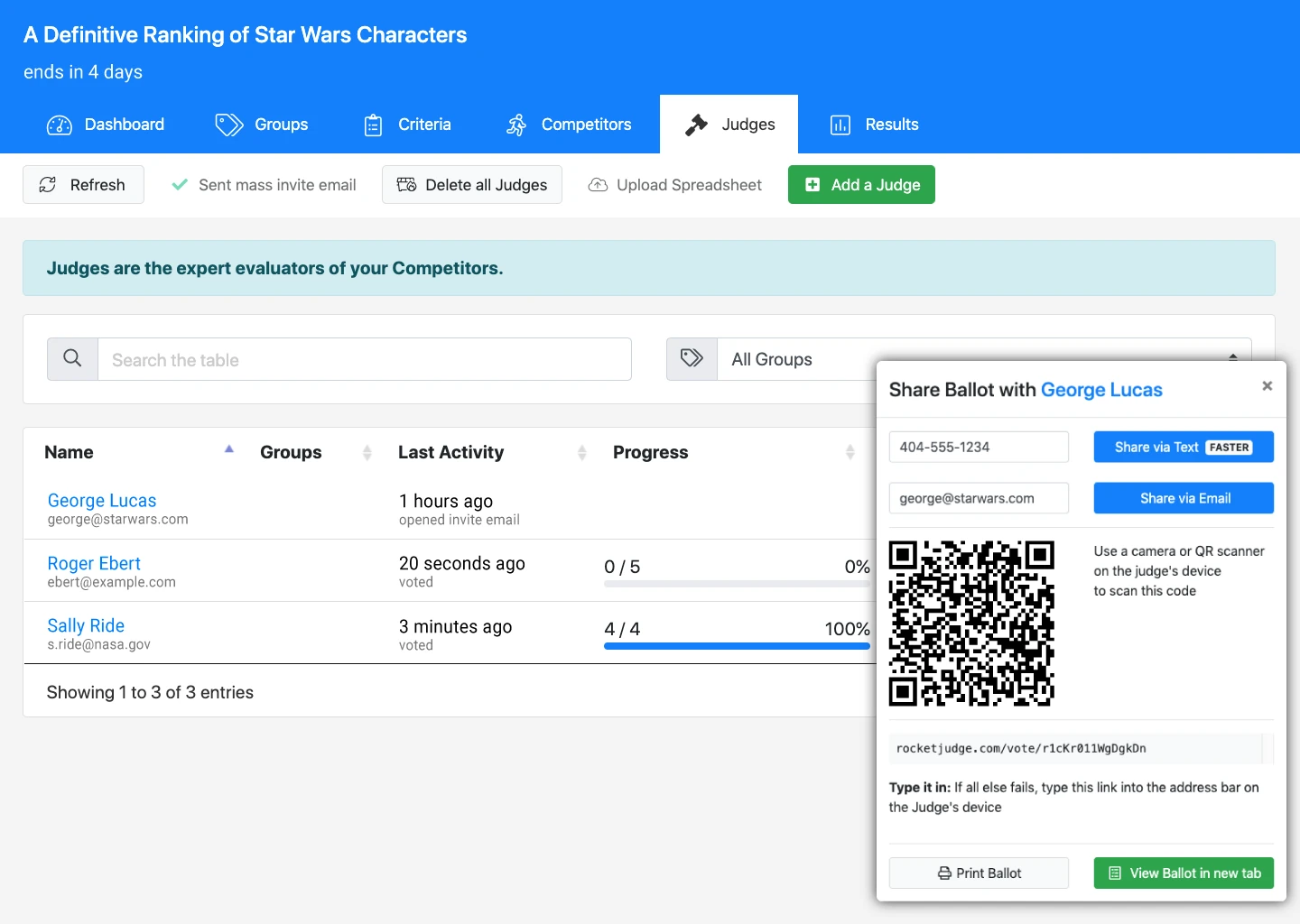
Managing judges in a room is a logistical headache. You have to sync schedules, book space, and keep everyone fed. Beyond the physical needs, there is the risk of bias—local judges might know local contestants. Keeping scores consistent across a panel takes more than just a shared spreadsheet.
Virtual judging brings a different set of problems to the table. Technical issues are a constant threat – unreliable internet connections, software glitches, and compatibility problems. Ensuring fair access is crucial; not everyone has access to the same technology or bandwidth. Verifying participant identity is also more difficult in a virtual setting, raising concerns about cheating or impersonation.
The lack of nonverbal cues can make it harder for judges to assess presentations or performances accurately. It's easy to miss subtle nuances that might be apparent in person. And then there's the challenge of maintaining engagement and preventing distractions in a virtual environment. Judges might be tempted to multitask or lose focus.
It’s not about one format being better than the other. Both in-person and virtual judging have their strengths and weaknesses. The key is to understand these challenges and choose a hybrid competition judging solution that addresses them effectively. Ignoring these issues can undermine the integrity of the entire competition.
- Physical logistics and venue costs
- Virtual Judging Challenges: Technical issues, fair access, identity verification, lack of nonverbal cues.
In-Person vs. Virtual Judging: A Comparative Overview (2026)
| Criteria | In-Person Judging | Virtual Judging | Hybrid Approach |
|---|---|---|---|
| Cost 💰 | Generally higher due to venue, travel, and logistical expenses. | Potentially lower, eliminating travel and venue costs. Software subscription fees apply. | Moderate; balances in-person experience with virtual efficiency. Requires investment in both physical and digital infrastructure. |
| Scalability 📈 | Scaling can be challenging; venue capacity and judge availability are limiting factors. | Highly scalable; easily accommodates a large number of participants and judges regardless of location. | Offers good scalability, leveraging virtual tools to augment in-person capacity. |
| Accessibility 🌍 | Limited by geographic constraints; may exclude participants or judges with travel restrictions. | Increased accessibility; allows participation from anywhere with an internet connection. | Expands accessibility by offering both in-person and remote participation options. |
| Potential for Bias 🤔 | Potential for unconscious bias due to personal interactions and proximity. | Potential for bias related to technical proficiency or internet access. Requires careful platform design to mitigate. | Can minimize bias through blind judging options and standardized virtual scoring interfaces, while retaining the benefits of in-person observation. |
| Technical Complexity ⚙️ | Relatively low; relies on traditional scoring methods and manual tallying (though increasingly streamlined with mobile apps like RocketJudge). | Higher; requires reliable internet connectivity, robust platform functionality, and technical support. | Moderate; requires integration of in-person and virtual systems. Successful implementation relies on seamless data flow. |
| Security 🔒 | Physical security of ballots and score sheets is a primary concern. Risk of tampering. | Data security and prevention of unauthorized access are critical. Platform security features are essential. | Requires a layered security approach, protecting both physical and digital components of the judging process. |
| Judge Interaction | Facilitates direct interaction and discussion among judges. | Interaction is typically limited to online communication tools. Can feel less personal. | Allows for both direct in-person interaction *and* virtual collaboration, offering flexibility. |
Illustrative comparison based on the article research brief. Verify current pricing, limits, and product details in the official docs before relying on it.
Core Features of Hybrid Judging Platforms
So, what does a robust hybrid judging platform need to offer? Secure submission handling is non-negotiable. Participants need a reliable way to submit their work, and organizers need to ensure that submissions are protected from unauthorized access. Real-time scoring is also essential, allowing judges to record their evaluations efficiently and accurately.
Integrated communication tools are critical for facilitating collaboration between judges, organizers, and participants. This includes features like chat channels, video conferencing integration, and email notifications. Judges need to be able to ask questions, share feedback, and resolve disputes quickly and easily. A system that supports asynchronous feedback is also valuable.
Robust reporting capabilities are a must-have. Organizers need to be able to generate detailed reports on judging results, identify trends, and track key metrics. These reports should be customizable and exportable in various formats. The ability to analyze scoring data can provide valuable insights for improving the competition in the future.
Platforms like RocketJudge emphasize streamlining the entire process, from ballot creation to automatic score tallying. Judgify focuses on a more comprehensive event management system, encompassing everything from contest planning to submission management. Both address the core needs of a hybrid event, but their approaches differ.
- Secure submission handling
- Real-time scoring
- Integrated communication tools
- Robust reporting capabilities
Scoring Methods for a Blended Approach
Adapting scoring methods for a hybrid environment requires careful consideration. Traditional rubrics, point systems, and ranked choice voting can all be used effectively, but they may need to be adjusted to account for the differences between in-person and virtual evaluations. The goal is to ensure fairness and consistency across all judges, regardless of their location.
Rubrics are particularly useful for providing clear and objective criteria for evaluating submissions. However, it’s important to ensure that the rubric is comprehensive and covers all relevant aspects of the competition. Point systems can be simple and easy to use, but they may not capture the nuances of complex evaluations.
Ranked choice voting can be a good option for competitions with a large number of submissions. It allows judges to rank their preferences, which can help to identify the most deserving winners. However, it can also be more complex to implement and analyze. Weighted scoring is possible, but it introduces another layer of complexity and potential for disagreement.
Regardless of the scoring method used, it’s crucial to provide judges with clear guidelines and training. They need to understand the criteria for evaluation and how to apply them consistently. Regular calibration sessions can help to ensure that all judges are on the same page. Consistency is paramount.
Managing Judge Communication & Collaboration
Effective communication is the backbone of any successful competition, and it’s even more critical in a hybrid environment. Judges need a way to connect with each other, with organizers, and with participants – both in-person and virtually. Dedicated chat channels are a great way to facilitate quick and informal communication. Think Slack or Microsoft Teams integrations.
Video conferencing integration is essential for holding meetings, providing feedback, and resolving disputes. Tools like Zoom, Google Meet, or Microsoft Teams can be used to host virtual judging panels. It’s important to ensure that all judges have access to reliable video conferencing equipment and a stable internet connection.
Clear escalation paths are needed for resolving disputes or addressing technical issues. Judges should know who to contact if they encounter a problem and how to get help quickly. A designated support team can provide assistance with technical issues, answer questions, and mediate disputes. A well-defined process is crucial.
Here’s a step-by-step guide to communication management: 1) Establish clear communication channels. 2) Schedule regular check-in meetings. 3) Provide a dedicated support contact. 4) Document all communication. 5) Encourage open and honest feedback. This proactive approach can prevent misunderstandings and ensure a smooth judging process.
Security and Data Privacy Considerations
Security and data privacy are non-negotiable in today’s world. Hybrid events involve handling sensitive information, including participant data, judging scores, and intellectual property. It’s crucial to choose a virtual judging platform with a strong security track record and robust data protection measures.
Data encryption is essential for protecting sensitive information from unauthorized access. All data should be encrypted both in transit and at rest. Access control mechanisms should be implemented to restrict access to data based on user roles and permissions. Only authorized personnel should have access to sensitive information.
Identity verification is crucial for preventing fraud and ensuring the integrity of the competition. Judges and participants should be required to verify their identities before accessing the platform. Multi-factor authentication can add an extra layer of security. Compliance with relevant privacy regulations, such as GDPR and CCPA, is also essential.
Look for platforms that undergo regular security audits and penetration testing. A transparent security policy is a good sign. Don’t underestimate the importance of a platform’s security posture. A data breach can have serious consequences, damaging the reputation of the event and eroding trust.
What's next for remote scoring
The future of hybrid judging is likely to be shaped by emerging technologies and evolving expectations. AI-powered scoring assistance is one area to watch. AI could be used to analyze submissions, identify patterns, and provide judges with insights. However, it’s important to use AI responsibly and avoid relying on it too heavily.
Blockchain-based verification could enhance the security and transparency of the judging process. Blockchain could be used to create a tamper-proof record of submissions and scores. This could help to prevent fraud and ensure the integrity of the competition. However, blockchain technology is still relatively new and complex.
More immersive virtual judging experiences are also on the horizon. Virtual reality (VR) and augmented reality (AR) could be used to create more engaging and realistic judging environments. Judges could virtually "walk through’ exhibits or ‘attend" performances. These technologies are still developing, but they have the potential to transform the judging experience.
Ultimately, the goal is to create a hybrid judging system that is fair, efficient, and engaging for all participants. This will require a combination of innovative technology, thoughtful design, and a commitment to best practices. The evolution of hybrid events will continue, and judging platforms must adapt to remain relevant.
- AI-powered scoring assistance
- Blockchain-based verification
- Immersive virtual judging experiences (VR/AR)


No comments yet. Be the first to share your thoughts!