
The problem with spreadsheets
Competition judging still relies on paper score sheets and manual spreadsheet entry. This setup is fragile. Even when judges try to be fair, human bias and simple math errors creep into the final results.
The real problems start when data gets entered. A simple typo in a spreadsheet can dramatically alter a contestant's final ranking. Then there’s the question of transparency. Participants often have limited insight into how their scores were calculated, and challenging a result can feel like an uphill battle. This lack of clarity erodes trust, both in the fairness of the competition and in the organizers running it.
It’s not that judges are deliberately unfair. It’s that the systems we’ve built are vulnerable to error and manipulation, whether intentional or accidental. A dance competition, a baking contest, a coding hackathon – all rely on accurate and impartial scoring. When that foundation is shaky, the entire event suffers. And as competitions grow in scale and prestige, these issues only become more pronounced.
The current reliance on centralized data storage also creates a single point of failure. A compromised spreadsheet, a lost hard drive, or even a simple software glitch can throw an entire competition into chaos. This is especially concerning for events with significant prizes or qualifying stakes. The need for a more robust and transparent system is becoming increasingly clear.
How blockchain works for contests
Blockchain is just a shared record that no one can edit in secret. Every time a judge submits a score, it is added as a new block in a permanent chain. Because everyone has a copy of the history, you can't change an old score without everyone noticing.
The key difference from a shared Google Sheet is that blockchain is decentralized. There isn’t one central authority controlling the data; it’s distributed across many computers. This makes it incredibly resistant to tampering. Because every transaction is verified by multiple participants, altering a single entry would require changing it on every copy of the blockchain, a practically impossible task.
Immutability is another critical feature. Once a transaction is recorded on the blockchain, it can’t be changed or deleted. This ensures the integrity of the data and provides a permanent audit trail. You don’t need to trust a central authority; you can verify the results yourself. This is especially useful in situations where trust is limited or where there’s a potential for conflict.
Recording scores on the chain
Implementing competition scoring on a blockchain involves treating each judge’s score as a transaction. When a judge evaluates a contestant, their score is recorded as a new block on the blockchain. This block includes details like the judge’s ID, the contestant’s ID, the score itself, and a timestamp. This creates a clear and auditable record of every evaluation.
The real power comes from using smart contracts. These are self-executing agreements written into the blockchain code. A smart contract can automatically calculate final scores based on pre-defined rules – for example, a weighted average of scores from multiple judges, or a ranked-choice system where higher rankings carry more weight. CompetitionSuite, for example, already offers detailed scoring system customization options; a blockchain implementation simply automates and secures those rules.
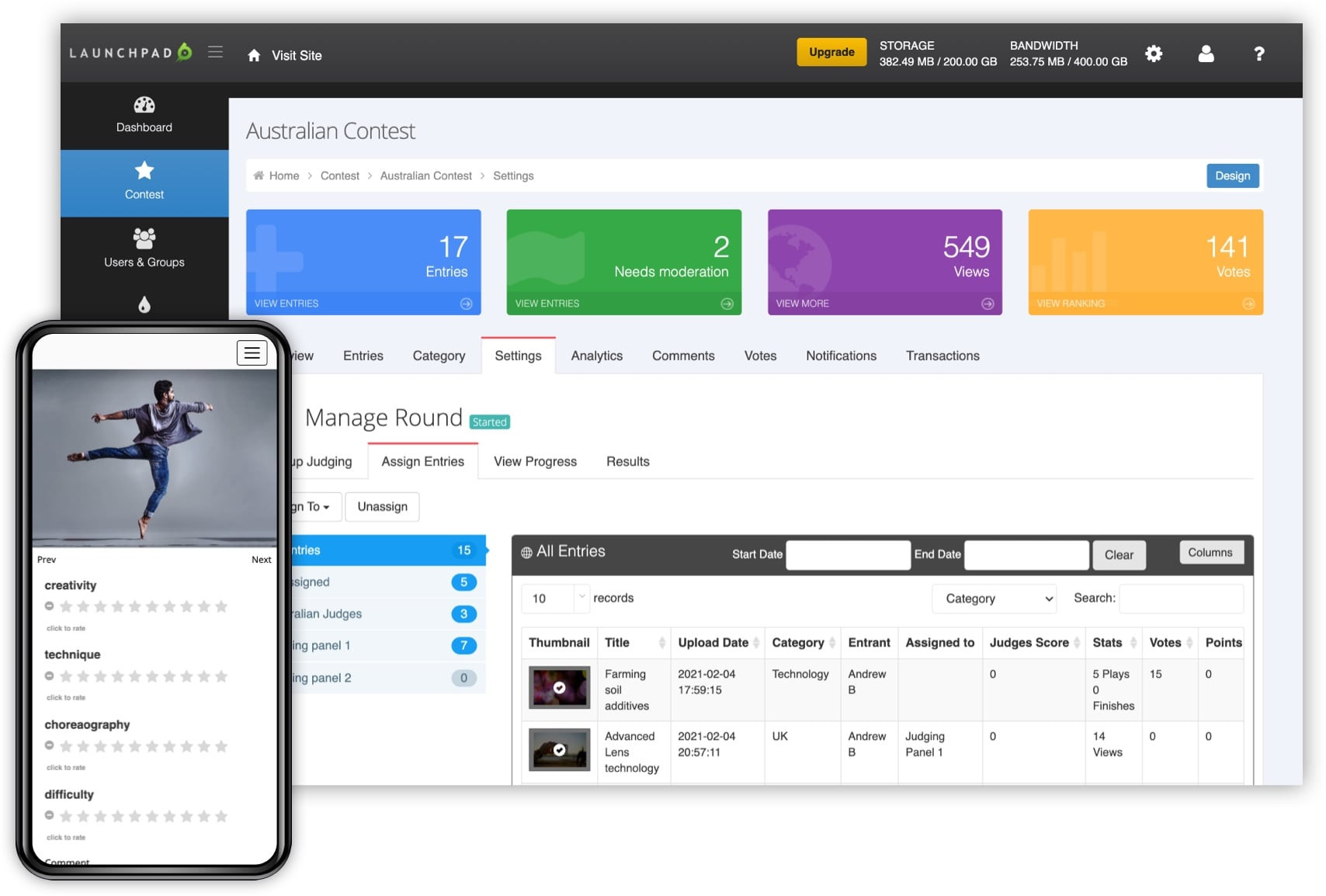
Judges would likely access a digital judging platform, which would then submit their scores as transactions to the blockchain. The platform would handle the technical complexities of interacting with the blockchain, ensuring that judges don't need to be crypto experts. Different scoring methods can be easily encoded into the smart contract. Want to drop the highest and lowest scores? Program it in. Need to account for different judging criteria? The smart contract can handle it.
Imagine a coding competition. Instead of manually reviewing code submissions, a smart contract could automatically run tests and assign scores based on performance. Or a livestock judging event where biometric data from the animals is recorded on the blockchain, ensuring unbiased assessment. The possibilities are broad.
Public audit trails
The biggest benefit of using blockchain for competition scoring is the unparalleled transparency it provides. Every score, every transaction, is permanently recorded on the blockchain and publicly accessible for anyone to verify. This eliminates the "black box" problem of traditional scoring systems. Participants can see exactly how their scores were calculated and confirm that the results are accurate.
Consider a hypothetical scenario: a contestant believes their score was unfairly lowered. In a traditional system, they would have to rely on the organizers to investigate, a process that can be slow and opaque. With a blockchain system, the contestant can independently examine the blockchain and verify the judge’s score, the scoring rules, and the entire calculation process.
This isn’t about preventing disputes; it’s about making them easier and faster to resolve. If a discrepancy is found, it’s immediately apparent, and the cause can be quickly identified. The audit trail provides irrefutable evidence, reducing the need for lengthy investigations and building trust in the fairness of the competition. It’s a shift from 'trust us' to 'verify for yourself'.
NorthPoint Dance Academy, for example, emphasizes the importance of clear judging criteria. A blockchain system simply adds a layer of verifiable proof to those criteria, ensuring they are consistently applied and accurately reflected in the final scores.
- The judge submits a score as a transaction.
- The network verifies the entry.
- Score is added to the blockchain, creating a permanent record.
- Contestant can view their score and the scoring process.
Where this is actually being used
While blockchain-based scoring systems are still relatively new, we’re starting to see practical applications emerge. The esports industry is a natural fit, with several platforms exploring blockchain to ensure fair and transparent matchmaking and tournament results. These systems aim to prevent cheating and manipulation, which are significant concerns in competitive gaming.
Beyond esports, blockchain is being explored for art contests and creative challenges. By recording the submission and judging process on the blockchain, organizers can verify the originality of the artwork and prevent plagiarism. Coding challenges, like those hosted on platforms like HackerRank, could also benefit from blockchain’s security and transparency.
One interesting pilot project involves livestock judging. Recording animal pedigree and performance data on a blockchain can create a tamper-proof record, improving the accuracy and fairness of livestock evaluations. This is particularly valuable in industries where traceability and authenticity are critical. Compe-scoring.com recognizes the importance of security in their competition scoring systems, and blockchain offers a potential solution.
The challenges these projects face are real. Scalability is a major concern, as blockchains can struggle to handle large volumes of transactions. User experience is another hurdle; making blockchain technology accessible to non-technical users is crucial for widespread adoption. However, these challenges are being actively addressed by developers and researchers.
Security risks
Blockchain isn't invincible. If one group controls more than half the network's computing power—a 51% attack—they could manipulate scores. This is rare on big networks like Ethereum, but it's a real risk for smaller, private setups.
A more significant concern is the potential for bugs in the smart contracts. If a smart contract contains errors, it could be exploited to manipulate scores or disrupt the competition. This is why rigorous auditing of smart contracts is essential before deployment. Developers need to thoroughly test and verify the code to ensure its security and correctness.
Using established blockchain platforms, like Ethereum or Polygon, can also mitigate risks. These platforms have large and active communities of developers who are constantly working to improve security. However, even with these precautions, it’s crucial to remain vigilant and monitor the system for any signs of malicious activity.
Blockchain isn’t a silver bullet for security. It’s a powerful tool, but it needs to be implemented carefully and responsibly. Proper security measures, including smart contract audits and ongoing monitoring, are essential to protect the integrity of the competition.

No comments yet. Be the first to share your thoughts!