
Assessing your judging needs
A local bake-off doesn't need the same oversight as a multi-stage coding competition with thousands of entries. Scale and complexity dictate your needs immediately. I've found that the more technical the submission, the more you need to worry about the logistics of the evaluation itself.
Consider the number of entries, the judging criteria, and the level of expertise required to accurately evaluate submissions. Is it subjective – like artistic merit – or objective – like speed or accuracy? The more subjective the criteria, the more important it is to have experienced, impartial judges. I want to be upfront: there's no one-size-fits-all answer, and sometimes a hybrid approach is best.
Think about the resources you have available. Do you have staff with the necessary skills and time to train and manage a judging panel? Or would it be more efficient to outsource the entire process? A clear understanding of your event’s specific needs is the first step in determining the best judging solution.
The case for professional services
External judges bring impartiality. They don't have a vested interest in who wins, which cuts down on bias. In high-stakes games, this isn't just about actual fairness—it's about the participants believing the process is clean.
Specialized expertise is another major benefit. Wine judging requires certified sommeliers, culinary competitions need experienced chefs, and technical contests demand professionals in the relevant field. Services like RocketJudge and Judgify facilitate access to judges with proven qualifications. You’re not relying on someone’s hobby; you’re getting a professional assessment.
Outsourcing judging also saves your team valuable time and resources. Professional services handle everything from judge recruitment and training to scoring tabulation and dispute resolution. This frees up your staff to focus on other aspects of event management. They've built systems for efficient logistics.
Consider the example of a large film festival. They often rely on professional judging panels composed of industry experts to ensure that the awards are given to the most deserving films. This adds credibility to the festival and attracts higher-quality submissions. Services manage the complexities of blind reviews and scoring.
Building internal judging capacity
Training judges internally is a viable option, particularly for smaller events or organizations with existing expertise. However, it's not as simple as just telling people to 'pick the best.' It requires a structured approach and a significant investment of time and resources. You must establish clear, objective criteria and scoring rubrics.
Effective training includes exercises to mitigate bias. Judges need to understand common cognitive biases – like confirmation bias or halo effect – and how to avoid them. Role-playing scenarios and blind judging exercises can help develop consistent evaluation skills. A well-defined rubric helps everyone apply the same standards.
Resources needed include dedicated training time, development of comprehensive materials (scoring guides, examples, and best practices), and ongoing quality control. Regular calibration sessions – where judges compare scores and discuss discrepancies – are essential. This isn’t a one-time event; it’s an ongoing process.
There are potential pitfalls. Conflicts of interest can arise if internal judges have personal relationships with participants. A lack of specialized knowledge can lead to inaccurate or unfair evaluations. And inconsistent application of standards can undermine the credibility of the competition. Relying solely on internal judges is a risk you need to carefully assess.
Comparing costs
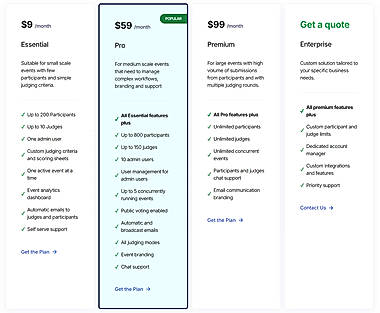
External judges usually cost between $100 and $500 per day. If you need a specialist—like a master sommelier or a senior software architect—expect to pay at the higher end. Don't forget to budget for flights and hotels if you aren't hiring locally.
Platform costs, such as those associated with RocketJudge or Judgify, can range from a few hundred to several thousand dollars, depending on the features and number of submissions. These platforms usually offer tiered pricing models. For in-house training, the primary cost is staff time – both for the training itself and for the time judges spend evaluating submissions.
Factor in the cost of developing training materials and the opportunity cost of staff being pulled from other duties. Consider the potential cost of resolving disputes if judging is perceived as unfair. That reputational damage can be significant. A poorly judged event can discourage future participation.
A rough estimate: a small local event might spend $500 - $2000 on external judges, while a larger event could easily exceed $10,000. In-house training costs can be harder to quantify, but should include all staff time and material development expenses. A detailed cost-benefit analysis is essential.
- Per-judge fees: $100 - $500 per day
- Platform Costs: $500 - $5000+
- Staff Time: Variable, depending on event size
External Judges vs. In-House Training: A Comparative Assessment
| Criterion | External Judges | In-House Training | Notes |
|---|---|---|---|
| Cost | Higher | Lower | External judges involve professional fees. In-house training requires investment in trainer time and materials, but can be reused. |
| Impartiality | Better for complex or high-stakes events | Potential for bias | External judges offer an objective perspective, especially when evaluating submissions from internal teams or with sensitive subject matter. In-house judges may have pre-existing relationships or departmental allegiances. |
| Expertise | Specialized, readily available | Development required | External judges are typically selected for their specific domain expertise. In-house training builds expertise, but takes time and may not reach the same depth. |
| Time Investment | Lower | Higher | Engaging external judges requires coordination, but less internal effort than developing and delivering comprehensive training. |
| Scalability | Highly Scalable | Limited by internal resources | External judging pools can be quickly expanded or contracted to meet event needs. In-house training capacity is constrained by the number of available trainers and participant time. |
| Dispute Resolution | Clearer process with independent review | Potential for internal conflicts | External judges often come with established dispute resolution protocols. Internal disputes can be more challenging to navigate objectively. |
| Consistency | Requires clear rubrics and judge briefings | Variable, dependent on training quality | Both methods rely on clear evaluation criteria. External judges need thorough onboarding; in-house training must be consistently applied and updated. |
Qualitative comparison based on the article research brief. Confirm current product details in the official docs before making implementation choices.
Software and tools
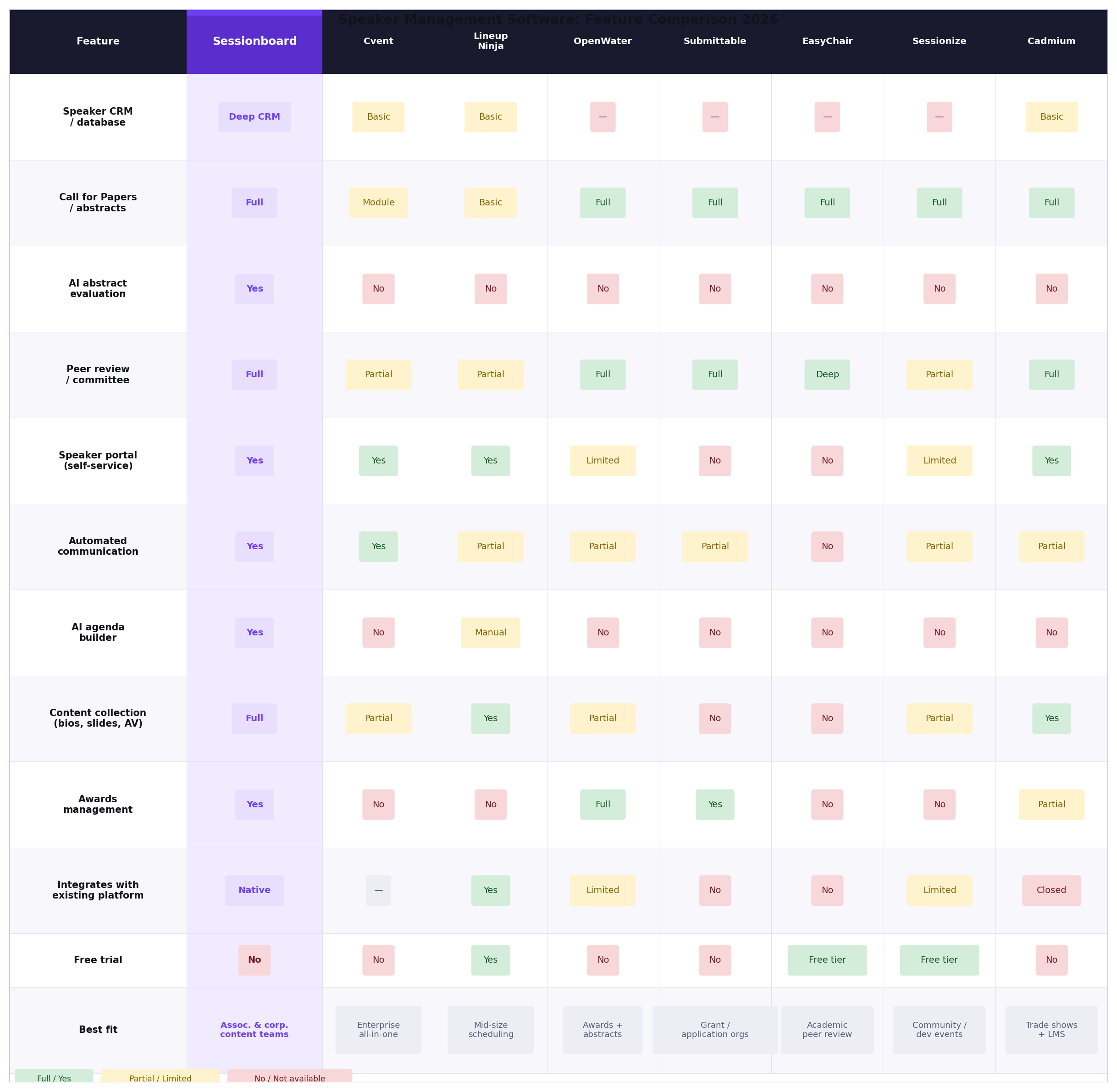
Technology can significantly streamline the judging process, regardless of whether you use external or internal judges. Platforms like RocketJudge and Judgify offer features like mobile scoring, real-time tabulation, secure data management, and automated reporting. These tools reduce errors and improve efficiency.
RocketJudge, for example, focuses on mobile judging for events in the real world, allowing judges to submit scores directly from their smartphones or tablets. Judgify offers a comprehensive suite of tools for contest planning, submissions management, and advanced scoring. They both handle complex scoring matrices and blind judging effectively.
Simpler options, like Google Forms or spreadsheets, can work for smaller events with fewer submissions. However, these tools lack the advanced features and security of dedicated judging platforms. Data security and compliance are critical, especially when dealing with sensitive information.
Consider the integration capabilities of any platform you choose. Does it integrate with your existing event management system? Can it handle the specific scoring requirements of your competition? The right technology can make a huge difference in the overall success of your event.
Hybrid Approaches: The Best of Both Worlds?
Often, the most effective solution is a blend of external expertise and internal resources. Hiring a lead judge with specialized knowledge to oversee a team of trained internal judges can provide both credibility and cost-effectiveness. The external expert ensures consistent application of standards.
Another hybrid model involves using a professional judging service for the initial rounds of a competition – to narrow down a large number of submissions – and then relying on internal judges for the finals. This reduces the workload on external judges and allows your team to be involved in the most critical stages.
For example, a coding competition might use an automated system to pre-screen submissions for basic functionality, then employ professional developers to review the top submissions for code quality and innovation, and finally have internal developers conduct final assessments. This layered approach ensures a thorough and fair evaluation.
The key is to leverage the strengths of both internal and external resources. Carefully consider your event’s specific needs and budget to determine the optimal mix. A well-designed hybrid approach can deliver the best of both worlds.
Risk Management: Avoiding Judging Controversies
No one wants a judging scandal. Proactive risk management is crucial. This starts with clear, concise rules that are communicated to all participants. The judging criteria must be transparent and objective, leaving no room for ambiguity. A robust dispute resolution process is also essential.
Establish a formal process for handling complaints. This should include a designated point of contact, a timeline for review, and a clear explanation of the appeal process. Document everything. Transparency builds trust and reduces the likelihood of disputes. Consider having a third-party review board for particularly sensitive cases.
Legal considerations are also important. Liability waivers can protect your organization from legal challenges. Data privacy policies must comply with relevant regulations. And potential conflicts of interest should be identified and addressed proactively. Professional event judging services often have these safeguards built-in.
It’s better to anticipate potential problems and address them before they escalate into a full-blown crisis. A well-defined risk management plan can save your event from reputational damage and legal liabilities. Consider an audit of the judging process after the event to identify areas for improvement.
- Clear rules: Share the criteria with everyone before the start
- Dispute Resolution: Establish a formal process for handling complaints
- Documentation: Keep detailed records of all judging activities
Essential Tools for Professional Event Judging

Pressure-sensitive Pro Pen 3 with customizable settings · Multi-touch gestures for intuitive navigation · Bluetooth connectivity for wireless operation
This professional-grade drawing tablet provides precise input and a natural feel, enhancing the accuracy and detail of digital evaluations.

World-class noise cancellation for focused listening · Comfortable over-ear design for extended wear · Bluetooth connectivity for wireless audio streaming
These noise-canceling headphones create an optimal environment for judges to concentrate on audio submissions without distraction.

All-in-one mobile printing, scanning, and copying · Built-in rechargeable battery for cordless operation · Wireless connectivity for easy device integration
This versatile mobile device allows for on-the-spot printing and scanning of documents, facilitating immediate review and record-keeping during judging.

Ultra-fast read/write speeds up to 2000MB/s · Durable, IP65-rated water and dust resistance · Compact and portable design with USB-C connectivity
This high-speed portable SSD ensures rapid access to large digital files and offers robust protection against environmental factors, ideal for managing event media.
As an Amazon Associate I earn from qualifying purchases. Prices may vary.


No comments yet. Be the first to share your thoughts!