
How blockchain handles scores
Blockchain is essentially a shared ledger that no single person can edit. When a judge enters a score, it’s bundled into a block and cryptographically linked to the one before it. This makes the record permanent. If someone tries to change a score after the fact, the math won't add up, and the network will reject it.
The key principles relevant to competition scoring are immutability, transparency, and decentralization. Immutability means that once a score is recorded on the blockchain, it cannot be changed. Transparency means that the record of scores is publicly visible (though the identities of judges and competitors can be anonymized). Decentralization means that no single entity controls the data; it’s distributed across the network.
Think of each judge’s score as a transaction being added to the blockchain. Once verified by the network, that score becomes a permanent part of the record. This is different from a traditional database, where a central administrator has the power to modify entries. The beauty of blockchain isn’t about replacing judges, but about creating a verifiable record of their decisions.
The goal isn't to replace human judges with robots. It's about creating a paper trail that can't be shredded. We get a record that is public and auditable without needing to understand the underlying math of hashing algorithms.
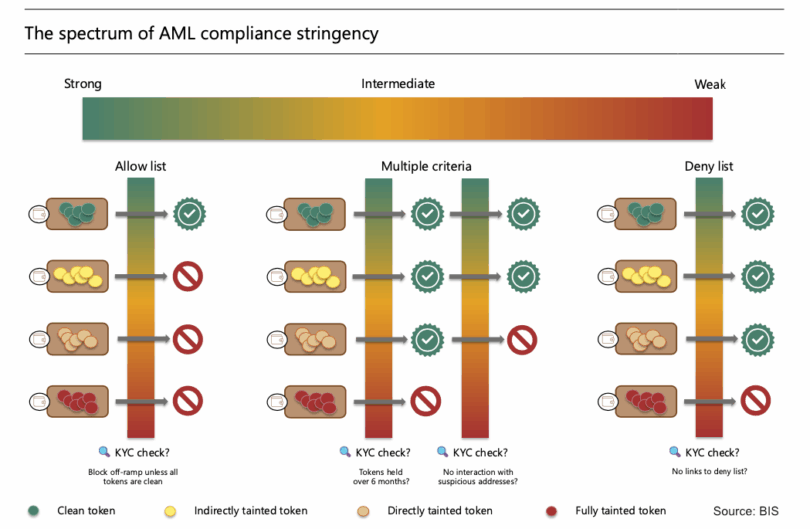
Moving data onto the chain
Getting scoring data onto a blockchain requires a bridge between the physical competition and the digital ledger. Several approaches are possible. One is direct entry by judges, using a secure application with digital signatures to verify their identity and prevent unauthorized scoring. This requires robust identity management systems to ensure only authorized judges can submit scores.
Another approach utilizes 'oracles' – third-party services that feed external data onto the blockchain. In this scenario, the scoring software might transmit aggregated scores to an oracle, which then records the data on the blockchain. This introduces a degree of trust in the oracle provider, so selecting a reputable and reliable oracle is crucial. CompetitionSuite, for example, could integrate with such a system.
Integrating blockchain with existing scoring software is a key step toward adoption. Rather than requiring a complete overhaul of current systems, a blockchain layer can be added to existing workflows. This could involve APIs that allow scoring software to interact with a blockchain network. The process would likely involve judges logging into a secure portal, verifying their identity, and submitting scores which are then cryptographically secured.
Secure identity verification is paramount. Judges must be reliably authenticated to prevent fraudulent scores. Decentralized identity solutions, using self-sovereign identity (SSI) principles, are emerging as a promising way to manage judge credentials without relying on a central authority. Smart contracts can also automate score calculations, ensuring consistency and reducing the risk of human error, and even automate prize distribution based on predefined rules.
Automation and administrative gains
While increased transparency is the most obvious benefit of blockchain-based scoring, the advantages extend far beyond simply knowing how a score was determined. Automated dispute resolution is a significant gain. Smart contracts can be programmed to automatically handle scoring disputes based on predefined rules, eliminating the need for lengthy and costly manual reviews.
Reduced administrative overhead is another key advantage. By automating score calculations and record-keeping, organizers can free up valuable time and resources. This streamlined process can lower costs and improve efficiency. The immutability of the blockchain also reduces the risk of data loss or manipulation, simplifying auditing and compliance.
Blockchain could also facilitate the development of new scoring metrics. For example, a system could track a judge’s consistency over time, rewarding judges who consistently apply the scoring criteria accurately. This could incentivize higher-quality judging and improve the overall fairness of the competition. North Point Dance Academy could benefit from this by tracking judge consistency.
Increased participation is a potential outcome. If competitors believe the scoring system is demonstrably fair, they may be more willing to participate, leading to larger and more vibrant competitions. This is especially true in niche areas where trust is paramount. While quantifying the cost savings is difficult at this stage, the potential for reduced administrative costs and dispute resolution expenses is substantial.
Early adopters in esports and art
Currently, widespread adoption of blockchain-based competition scoring is still in its early stages. However, several projects are exploring its potential. The esports industry, with its emphasis on fair play and digital transactions, is a natural fit. Platforms are being developed to record match results and player statistics on a blockchain, ensuring transparency and preventing cheating.
Art competitions and coding challenges are also experimenting with blockchain solutions. These competitions often involve subjective evaluation, making transparency particularly important. The use of NFTs (Non-Fungible Tokens) to represent artwork or code submissions, and to record judging results, is gaining traction. This allows for verifiable proof of authorship and scoring.
We are still waiting for a dominant player to emerge. Most current startups are focusing on the plumbing—building APIs that let existing event software talk to a blockchain rather than building entirely new platforms from scratch.
Organizations most likely to adopt this technology first are those that already prioritize transparency and have a strong technical foundation. Esports leagues, professional coding competition organizers, and art collectives are leading the way. As the technology matures and becomes more accessible, we can expect to see broader adoption across a wider range of competitive disciplines.
Comparison of Traditional vs. Blockchain-Based Competition Scoring Systems
| Dimension | Traditional Scoring | Blockchain Scoring |
|---|---|---|
| Transparency | Limited; scoring often opaque to participants | High; all scores and criteria are publicly verifiable on the blockchain |
| Immutability | Vulnerable to alteration; scores can be changed post-evaluation | Highly Immutable; records are tamper-proof once written to the blockchain |
| Cost | Generally Lower initial setup costs | Potentially Higher initial costs due to development/integration, but may reduce long-term audit expenses |
| Dispute Resolution | Subjective; relies on appeals processes and organizer discretion | More Objective; provides a clear audit trail for resolving disputes |
| Scalability | Can be challenging to scale for large events without significant administrative overhead | Scalability dependent on the chosen blockchain solution; some blockchains offer better scalability than others |
| Auditability | Requires trust in the organizing body for accurate record-keeping | Enhanced Auditability; full history of scores and judging criteria is readily available |
| Complexity | Relatively Simple to implement and understand | Higher Complexity; requires understanding of blockchain technology and smart contract development |
| Data Control | Centralized; organizer has full control over data | Decentralized; data is distributed across the network |
Qualitative comparison based on the article research brief. Confirm current product details in the official docs before making implementation choices.
Obstacles to implementation
Despite its promise, blockchain-based scoring faces several hurdles to widespread adoption. Scalability is a major concern. Many blockchain networks have limited transaction speeds, which could be a bottleneck for competitions with a large number of participants and scores. Layer-2 scaling solutions are being developed to address this issue, but they add complexity.
Cost is another factor. Blockchain transactions often incur 'gas fees,' which can be significant, especially during periods of high network congestion. While gas fees are decreasing and Layer-2 solutions offer lower costs, they remain a barrier for smaller competitions. Regulatory uncertainty also poses a challenge. The legal status of blockchain technology is still evolving in many jurisdictions.
The learning curve for judges and organizers is also considerable. Understanding blockchain concepts and using the necessary tools requires training and technical expertise. This can be a deterrent for organizations that lack internal technical resources. Furthermore, the energy consumption of some blockchain networks (like proof-of-work systems) raises environmental concerns.
However, more sustainable alternatives, such as proof-of-stake blockchains, are gaining popularity. These systems require significantly less energy to operate. It’s crucial to carefully consider the environmental impact when selecting a blockchain platform. Blockchain isn’t a silver bullet; it requires careful planning and implementation to overcome these challenges.
What to expect by 2026
By 2026, expect to see these systems move from experimental pilots to standard practice in esports. While your local bake-off probably won't be on-chain yet, high-stakes gaming leagues are already moving this way to satisfy skeptical fanbases.
Layer-2 scaling solutions will play a critical role in addressing scalability concerns. These solutions, such as rollups and sidechains, will enable blockchain networks to handle a higher volume of transactions at a lower cost. This will make blockchain-based scoring more feasible for larger competitions. We’ll likely see more integrations with existing event management software, simplifying the adoption process.
Decentralized identity solutions will become increasingly important for verifying judge credentials. These solutions will allow judges to prove their identity and qualifications without relying on a central authority, enhancing security and trust. We may also see the emergence of standardized protocols for recording scoring data on a blockchain, promoting interoperability between different platforms.
I don’t foresee blockchain completely replacing traditional scoring methods by 2026. However, it will establish itself as a viable and attractive option for organizations that prioritize transparency, fairness, and security. The technology will likely be adopted first by those who are already comfortable with digital tools and have a strong incentive to build trust with their competitors. The focus will be on augmenting existing systems, not necessarily replacing them entirely.

No comments yet. Be the first to share your thoughts!