
Judging beyond the table
For decades, competition judging has been a largely physical affair. Judges gather at a venue, often traveling significant distances, to observe competitors and assess their skills. This process is fraught with logistical challenges – securing venues, coordinating travel, and managing large teams of people. Beyond the logistics, there’s the potential for inherent biases, conscious or unconscious, affecting evaluations. We’ve all heard stories of judges favoring local teams or being swayed by a competitor’s presentation.
Virtual reality is emerging as a compelling solution, not as some distant futuristic concept, but as a practical evolution of existing judging practices. It’s a shift from observing a competition to experiencing it, almost alongside the participants. This isn’t about replacing human judgment; it’s about augmenting it with powerful new tools. Early adopters, particularly in robotics competitions like those documented by the RECF Library (kb.roboticseducation.org), have begun to explore the possibilities.
The initial hurdles were significant. Bandwidth limitations, the cost of VR hardware, and the need for specialized software all presented challenges. But as VR technology has matured and become more affordable, the barriers to entry have lowered considerably. We're now at a point where VR judging is becoming a viable option for a wider range of events, and even smaller competitions are starting to explore the benefits. The key is understanding that this is a process of adaptation, not a complete overhaul.
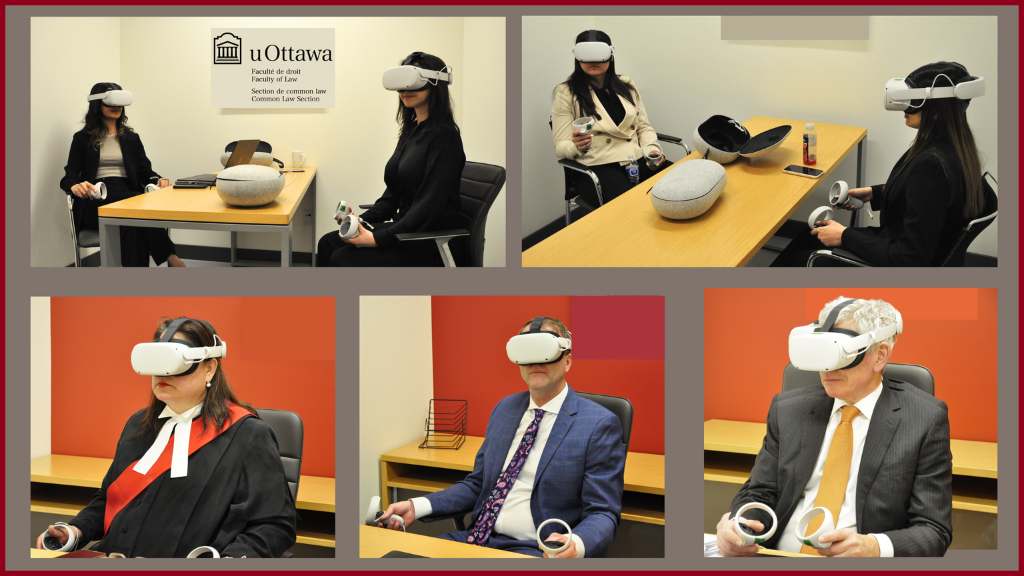
Current hardware and network needs
Forget the fully immersive, haptic-suit-laden visions of science fiction. Current VR judging relies on readily available consumer-grade hardware and increasingly sophisticated software. Headsets like the Meta Quest 3 and HTC Vive offer a good balance of affordability and performance. The core of the system is a real-time video feed from the competition, streamed directly to the judges' headsets. Spatial audio is also crucial, allowing judges to pinpoint the location of sounds within the virtual environment.
Low latency is paramount. A delay of even a few milliseconds can disrupt the judging process and potentially lead to inaccurate evaluations. This requires robust network infrastructure and optimized streaming protocols. Standardized data formats are also essential. Different judging platforms need to be able to communicate with each other seamlessly, regardless of the hardware or software being used. This interoperability is still a work in progress, but progress is being made.
While full haptic feedback is still largely experimental, some events are beginning to incorporate limited tactile sensations. For example, judges evaluating robotic builds might receive subtle vibrations when a robot makes contact with an object. This added layer of sensory information can enhance the judging experience, but it’s not yet a standard feature.
- Meta Quest 3 or HTC Vive headsets
- High-bandwidth internet connection
- Real-time video streaming software
- Spatial audio system
- Standardized data format for scoring
Scoring in virtual spaces
Translating traditional scoring rubrics to a VR environment requires careful consideration. The advantage of VR is the ability to provide judges with a much more granular view of the competition. They can rewind and re-examine key moments from multiple perspectives, something that’s simply not possible with traditional judging. This level of detail can lead to more accurate and consistent scoring.
Collaborative judging is another exciting possibility. Multiple judges can review the same event in a shared virtual space, discussing their observations and reaching a consensus. This can help to mitigate bias and ensure that all aspects of the competition are thoroughly evaluated. The VEX Robotics World Championship judging guidelines (recf.org) already emphasize the importance of clear criteria and consistent application, and these principles can be effectively implemented in a VR environment.
One of the most significant potential benefits of VR judging is the reduction of bias. By removing physical appearance and location from the equation, judges may be more likely to focus solely on the merits of the competitor’s performance. This is a complex issue, and more research is needed, but the initial results are promising. The ability to anonymize competitors within the VR environment is a powerful tool for promoting fairness. Importantly, it's not a perfect solution, but a step toward a more objective evaluation.
Traditional Judging vs. VR Judging: A Comparative Overview (2026)
| Criterion | Traditional Judging | VR Judging |
|---|---|---|
| Objectivity | Medium - Susceptible to personal biases and subjective interpretation. | Better for - Potential to reduce bias through standardized virtual environments and focused evaluation parameters. |
| Consistency | Medium - Variability between judges is common; calibration efforts are needed. | Higher - Standardized VR experience promotes consistent evaluation across judges. |
| Efficiency | Lower - Requires physical presence, travel, and potentially lengthy review times. | Better for - Enables remote judging and potentially faster review cycles due to focused presentation of entries. |
| Cost | Higher - Includes travel expenses, venue costs, and significant logistical overhead. | Trade-off - Initial investment in VR hardware and software; potential long-term savings on travel and venue costs. |
| Scalability | Lower - Limited by the number of available judges and physical space. | Better for - Easily scales to accommodate a larger number of entries and judges without geographical limitations. |
| Judge Safety | Medium - Potential risks associated with travel and large gatherings. | Higher - Eliminates travel risks and reduces exposure to health concerns associated with in-person events. |
| Accessibility | Medium - Requires judges to be physically present, potentially limiting participation for some. | Better for - Increases accessibility for judges with mobility limitations or geographical constraints. |
Qualitative comparison based on the article research brief. Confirm current product details in the official docs before making implementation choices.
Latency and fairness
Let's be realistic: VR judging isn't without its challenges. Latency is the biggest hurdle. A delayed video feed can make it difficult for judges to accurately assess timing and coordination, potentially leading to incorrect scores. Minimizing latency requires a multi-pronged approach, including edge computing (processing data closer to the source), optimized streaming protocols, and a robust network infrastructure.
Fairness is another key concern. How do you ensure that all judges have the same experience, regardless of their internet connection speed or VR hardware? What about judges who are new to VR? To address these issues, it’s important to provide judges with adequate training and support. Standardized VR environments and pre-competition calibration sessions can help to level the playing field.
It's also crucial to have a backup plan in place in case of technical difficulties. If a judge experiences a connectivity issue, there should be a mechanism for temporarily switching to a traditional judging method. We need to acknowledge that VR judging is still evolving, and there will inevitably be glitches along the way. It's about managing those risks effectively.
- Edge computing to reduce latency
- Optimized streaming protocols
- Robust network infrastructure
- Standardized VR environments
- Pre-competition calibration sessions
- Backup judging methods
Immersive judge training
The benefits of VR extend beyond just the live judging process. VR is a powerful training tool that can help judges develop a deeper understanding of the competition and the challenges faced by the competitors. Imagine being able to experience the competition from the competitor's perspective – seeing the arena through their eyes, feeling the pressure of the moment.
Creating realistic VR simulations of competition scenarios allows judges to practice their skills in a safe and controlled environment. They can review past competitions, analyze different strategies, and refine their scoring criteria. This hands-on training can significantly improve the consistency and accuracy of judging.
This immersive training can also foster empathy and a greater appreciation for the dedication and hard work of the competitors. When judges truly understand what it takes to succeed, they are better equipped to make fair and informed evaluations. The VEX Forum (vexforum.com) discussions show the community's desire for improved feedback, and VR training can directly address this need.
- VR simulations of competition scenarios
- Perspective-taking exercises
- Review of past competitions
- Refinement of scoring criteria
The cost of going virtual
The cost of implementing VR judging is a significant factor. VR headsets can range in price from a few hundred to over a thousand dollars per unit. Software licenses, network upgrades, technical support, and judge training all add to the overall expense. It's not a cheap solution.
However, it's important to compare these costs to the expenses associated with traditional judging. Travel expenses for judges, venue rental fees, and the administrative overhead of coordinating a large event can quickly add up. In some cases, VR judging may actually be more cost-effective, especially for large-scale events with geographically dispersed judges.
The initial investment in hardware and software is the biggest hurdle. But as VR technology becomes more mainstream, prices are likely to fall, making it more accessible to a wider range of events. Exploring rental options for headsets and leveraging existing network infrastructure can also help to reduce costs.
- Headsets cost between $300 and $1,500 each
- Software Licenses: Varies depending on platform
- Network Upgrades: Potential costs for increased bandwidth
- Technical Support: Ongoing maintenance and troubleshooting
- Judge Training: Costs associated with onboarding and certification
What comes next for event evaluation
The future of event evaluation is likely to involve a seamless integration of VR, AI, and machine learning. Imagine AI algorithms that can automatically identify key moments in a competition, flag potential rule violations, or even provide real-time feedback to judges. This could significantly improve the efficiency and accuracy of the judging process.
VR can also be used to create more immersive and engaging spectator experiences. Fans could virtually attend events, experiencing the action from the best seats in the house. They could even interact with judges and competitors in a virtual environment. This has the potential to attract a larger audience and generate more revenue for event organizers.
We're also likely to see the development of more sophisticated VR judging platforms with advanced features such as haptic feedback, eye tracking, and gesture recognition. These technologies will further enhance the immersive experience and provide judges with even more detailed information. The evolution won’t just be about how we judge, but who is involved – opening up opportunities for remote participation and broader expertise. The possibilities are truly exciting.
Do you think VR judging will become the standard for major competitions within the next 5 years?
Virtual reality is making waves in the competition judging world. We would love to hear your take on where this technology is headed. Vote below and share your thoughts in the comments!

No comments yet. Be the first to share your thoughts!