
Judging software budget
Setting a realistic budget for judging software means balancing feature depth against the scale of your event. While some platforms offer free tiers for small, low-volume contests, professional-grade tools with advanced scoring rubrics, blind review modes, and real-time analytics typically start at a monthly subscription or annual license fee. Understanding these tiers helps you avoid overpaying for features you won’t use or underestimating the cost of scaling.
For small community awards or local competitions, entry-level solutions like Judgify or Submittable provide robust core functionality without the enterprise price tag. These platforms are designed to handle abstract submissions and award management efficiently, making them ideal for organizers who prioritize ease of use and rapid deployment over complex custom workflows. Their pricing models are often transparent, allowing you to estimate costs based on the number of judges, entries, or active contests.
As your contest grows in size and complexity, you may need to invest in higher-tier plans that offer dedicated support, custom branding, and integration capabilities. These features become essential when managing large-scale competitions with hundreds of judges and thousands of entries, where data security and performance stability are critical. Always compare the total cost of ownership, including any additional fees for extra judges or storage, to ensure the platform aligns with your long-term operational needs.

As an Amazon Associate, we may earn from qualifying purchases.
Shortlist real options
Choosing the right platform depends on your event format. Are you running a digital submission contest with written entries, or a live competition requiring real-time scoring? The strongest judging software options handle these distinct workflows differently. We compared four leading platforms to help you identify the right fit for your fair evaluation needs.
Judgify
Judgify functions as a comprehensive abstract and award management system. It supports diverse nomination types and is well-suited for organizations managing multiple contest categories simultaneously. The platform centralizes the entire process, from entry collection to final award distribution. It works well for corporate awards, academic competitions, and grant programs that require structured scoring rubrics.
Submittable
Submittable offers a start-to-finish solution for competition judging. It keeps all judging activities in one place, including entry collection, scoring, and decision-making. The platform is particularly strong for creative competitions, arts grants, and literary contests where reviewers need to evaluate written or visual submissions. Its interface is designed to reduce administrative overhead for large-scale judging panels.
ScoreJudge
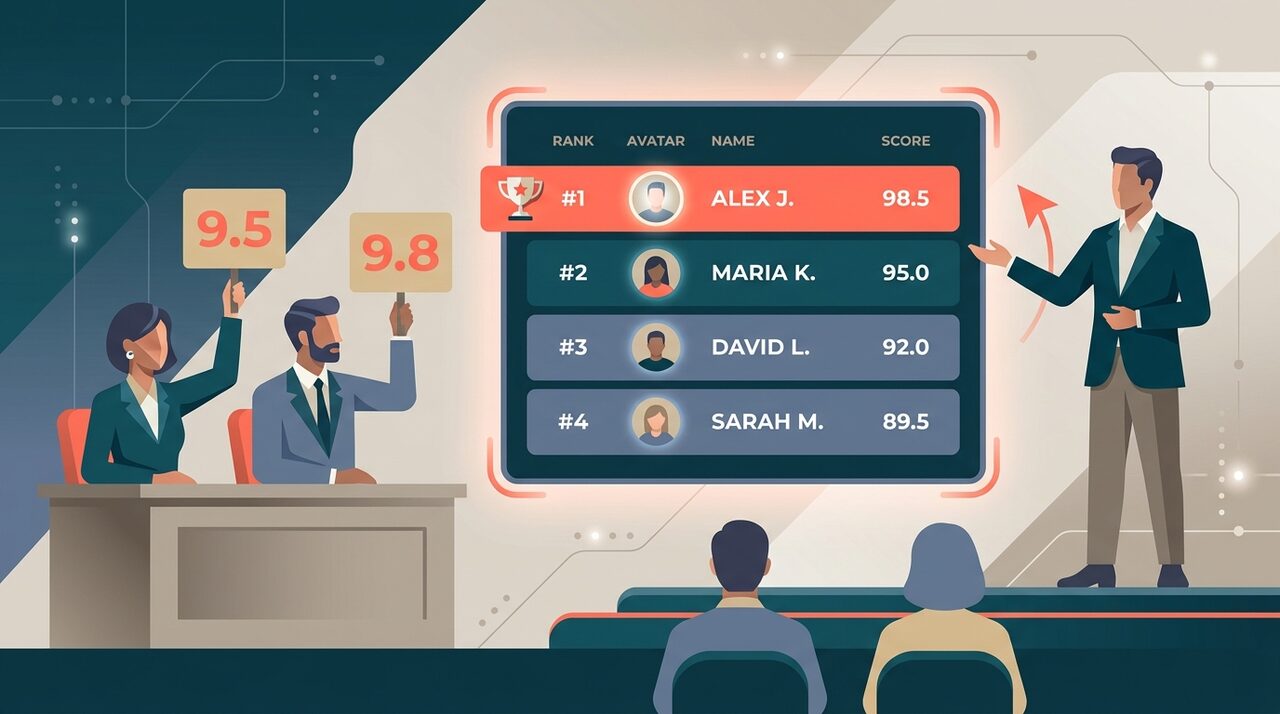
ScoreJudge specializes in real-time competition judging for live events. It allows multiple judges to score contestants while audiences watch results unfold. This makes it an ideal choice for hackathons, talent shows, sports competitions, and debate tournaments. The platform prioritizes speed and transparency, ensuring that live scoring is accurate and visible to participants in real time.
Judging Hub
Judging Hub provides awards and judging software for modern event teams. It streamlines entry collection, coordinates scoring among judges, and publishes results efficiently. The platform is designed to help event organizers recognize winners with minimal friction. It is suitable for a wide range of events, from local community contests to professional industry awards.
| Platform | Best For | Scoring Mode | Live Scoring |
|---|---|---|---|
| Judgify | Abstract & Award Management | Rubric-based | No |
| Submittable | Creative & Literary Contests | Review-based | No |
| ScoreJudge | Live Competitions | Real-time | Yes |
| Judging Hub | Modern Event Teams | Coordinated | No |


As an Amazon Associate, we may earn from qualifying purchases.
Inspect the expensive parts
The highest cost in any judging platform isn’t the subscription fee—it’s the time lost to broken workflows and data errors. When software fails, organizers spend hours manually reconciling scores, chasing missing entries, or re-running calculations. These failures are expensive because they scale with every additional judge and submission.
Use this checklist to audit the most expensive failure points before signing a contract.

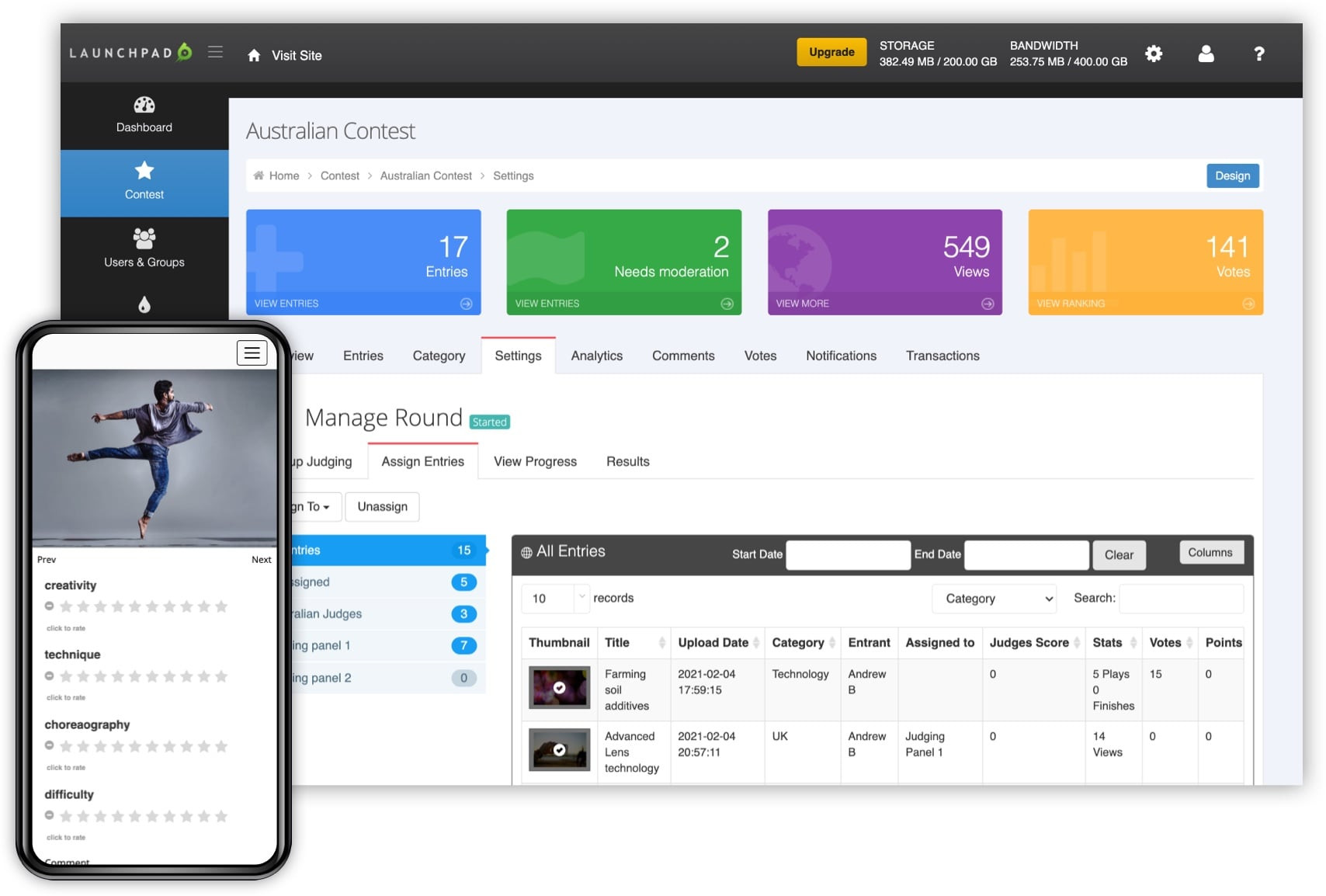
Score aggregation must update instantly. If a judge submits a score, it should appear in the leaderboards or summary views immediately. Delayed updates create uncertainty and force organizers to manually refresh or export data to verify results. Test this by submitting a test score during a live demo and watching the dashboard.
Venues often have poor Wi-Fi. If judges lose connection, their scores shouldn’t vanish. Look for offline mode that caches entries locally and syncs automatically when connectivity returns. Without this, you risk losing hours of work or forcing judges to switch devices mid-round.
Complex contests involve head judges, panelists, and administrators. Ensure the platform allows granular control over who can view, edit, or finalize scores. Misconfigured permissions lead to accidental score changes or unauthorized access, which can invalidate an entire round of judging.

You will need to extract data for reporting, auditing, or integration with other tools. Verify that exports support CSV, Excel, or PDF formats without losing formatting or metadata. Rigid export options force manual data entry later, adding significant labor costs.
Plan for ownership costs
The sticker price is only the beginning. When evaluating contest management platforms, you must account for the full cost of ownership, which includes setup fees, per-entry or per-judge pricing, and ongoing maintenance. A platform that looks affordable for a small local contest can become expensive quickly as your participant base grows.
Hidden fees that add up
Many software providers use tiered pricing models that penalize scale. Watch for charges that trigger once you exceed a certain number of submissions or judges. Common hidden costs include:
- Setup or onboarding fees: One-time charges for migrating data or configuring scoring rubrics.
- Per-entry fees: Small costs added for every submission, which can multiply into thousands for large contests.
- Premium support costs: Access to dedicated account managers or priority bug resolution often requires a higher-tier plan.
Maintenance and integration costs
Software requires regular updates and occasional integration with other tools like payment gateways or CRM systems. If the platform lacks robust APIs, you may need to hire technical support to maintain connections between systems. Factor in the time your team spends managing user permissions, updating judging criteria, and troubleshooting access issues during the event.
When cheap stops being cheap
A low upfront cost often signals limited scalability or poor customer support. If a platform struggles to handle a sudden spike in traffic or fails to export data cleanly, the cost of fixing these issues—or switching platforms mid-contest—will far exceed the initial savings. Always request a detailed pricing breakdown that includes all potential volume-based fees before signing a contract.
Judging software: what to check next
Choosing the right platform comes down to matching your event format with the tool’s scoring engine. Whether you are running a hackathon, a talent show, or an abstract award, the software must handle your specific scoring logic without friction.
Can I use free judging software? Some platforms like Judgify offer limited free tiers or trial periods, which work well for small-scale internal competitions. However, for large events requiring real-time scoring and audience visibility, paid solutions like ScoreJudge or Submittable provide the necessary reliability and features.
How does software ensure fair evaluations? Top platforms automate the randomization of entries to judges, preventing bias and duplicate scoring. Systems like Submittable and Judging Hub also allow for blind judging modes and customizable rubrics, ensuring every entry is measured against the same criteria.
Is real-time scoring necessary? For live events where audiences want to see results instantly, real-time capabilities are essential. Software like ScoreJudge is built for this, displaying live scores on screens. For traditional award ceremonies or abstract submissions, batch processing is sufficient and often easier to manage.
Can I manage the entire contest lifecycle? Yes. Comprehensive platforms like Judgify and Submittable handle everything from entry collection and judge assignment to scoring, ranking, and winner announcement. This eliminates the need to juggle multiple tools for registration, judging, and results.
No comments yet. Be the first to share your thoughts!