
Judging software budget
2026 guide: Choosing the Best Judging Software and Contest Management Platform for Fair Evaluations works best when the purchase path is explicit. Verify the source, compare the offer against real alternatives, check the total cost, and confirm what happens after payment before you decide. After each comparison, write down the one risk that would change your mind. If the seller, condition, support, warranty, shipping, or upkeep still feels uncertain, resolve that question before moving to checkout.
The simplest way to use this section is to verify the seller, compare the total cost, and resolve the biggest risk before you commit.
Shortlist real options
2026 guide: Choosing the Best Judging Software and Contest Management Platform for Fair Evaluations works best as a sequence, not a scramble through settings. Do the minimum first: confirm compatibility, connect the core hardware, update only when needed, and test the result before adding optional features. That order keeps the task understandable and makes failures easier to isolate. After each step, pause long enough for the interface to finish syncing. Many setup problems are timing problems disguised as configuration problems. If the same step fails twice, record the exact error, restart the smallest affected piece, and retry before moving deeper.
| Factor | What to check | Why it matters |
|---|---|---|
| Fit | Match the option to the primary use case. | A good deal still fails if it does not fit the job. |
| Condition | Verify age, wear, and service history. | Hidden condition issues erase upfront savings. |
| Cost | Compare purchase price with likely upkeep. | The cheapest option is not always the lowest-cost option. |
Inspect the expensive parts
2026 guide: Choosing the Best Judging Software and Contest Management Platform for Fair Evaluations works best as a sequence, not a scramble through settings. Do the minimum first: confirm compatibility, connect the core hardware, update only when needed, and test the result before adding optional features. That order keeps the task understandable and makes failures easier to isolate. After each step, pause long enough for the interface to finish syncing. Many setup problems are timing problems disguised as configuration problems. If the same step fails twice, record the exact error, restart the smallest affected piece, and retry before moving deeper.

Plan for ownership costs
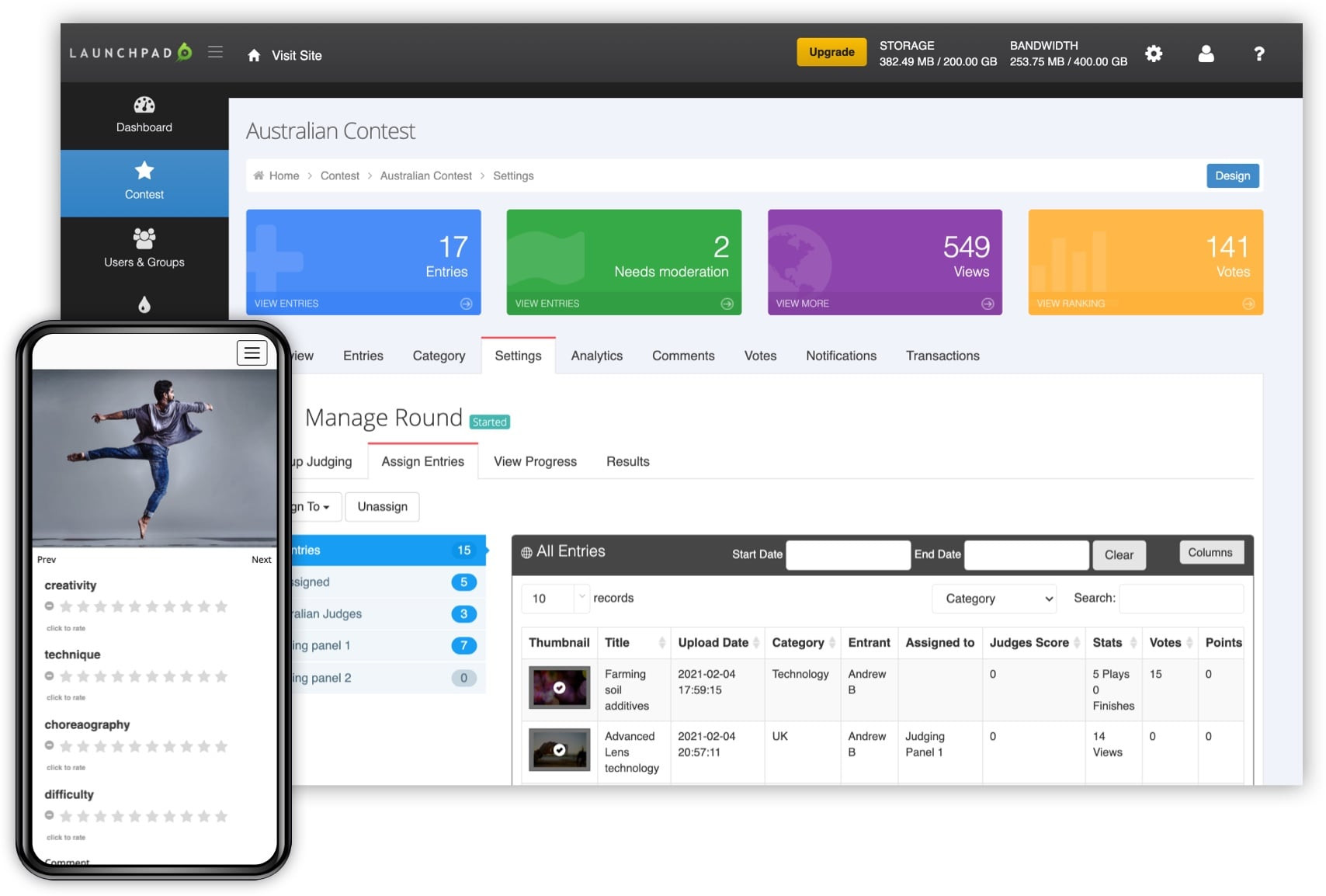
The sticker price of judging software is rarely the final bill. Most platforms operate on a subscription model where the cost scales with your needs, meaning that a budget-friendly entry tier can quickly become expensive as you add judges, entries, or rounds. When evaluating options, look past the monthly fee and calculate the total cost of ownership over a typical two-year period.
Maintenance and hidden fees often catch organizers off guard. Some vendors charge extra for essential features like custom scoring rubrics, data export capabilities, or dedicated support during live judging events. Others may increase prices annually without notice. Always check the fine print for overage charges if your contest exceeds its included entry limit, as these penalties can double your initial budget.
Choosing a cheaper platform can stop being a bargain if it lacks scalability. If the software requires manual workarounds—such as exporting data to Excel to create leaderboards or emailing judges individually for scores—you are paying with staff time. Invest in a system that automates these workflows, even if the upfront cost is higher, to ensure the software remains efficient as your competition grows.


As an Amazon Associate, we may earn from qualifying purchases.
Judging software: what to check next
Choosing the right platform depends on your event format and judge workflow. Here are answers to the most common practical concerns before you commit.
How do I prevent judges from colluding or biasing scores?
Look for role-based permissions and blind judging features. Platforms like Submittable and Judgify anonymize entries so judges score work, not identities. Real-time scoring tools like ScoreJudge lock in scores immediately to prevent last-minute group influence. This separation ensures fairer evaluations from the start.
Can judges score on mobile devices offline?
Yes, but only if the software supports local caching. Apps like e-Judging Pro allow judges to enter scores without internet, syncing when connectivity returns. For live events, ensure the platform works on iOS, Android, and Windows. Offline capability is essential for rural fairs or venues with poor Wi-Fi.
Is it easy to export final results for announcements?
The best systems generate clean CSV or PDF exports instantly. Avoid platforms that require manual data entry to finalize results. Tools like Judging Hub and Submittable automate leaderboard generation, letting you publish winners directly to your website or social media without spreadsheet errors.
What is the cost difference between free and paid judging software?
Free tiers, like those on Capterra, often limit the number of judges or entries. Paid solutions offer advanced features like custom scoring rubrics, automated notifications, and priority support. For small contests, a free plan may suffice, but larger competitions need the reliability and scalability of a paid platform.
No comments yet. Be the first to share your thoughts!