
How we picked the best platforms
Choosing a contest management platform requires looking past flashy entry forms to the backend where fairness actually happens. We evaluated platforms based on judging workflow flexibility, entry management, and scoring accuracy. The right software doesn't just collect submissions; it structures the evaluation process to minimize bias and administrative drag.
Our primary criterion was judging workflow flexibility. A platform must support complex scoring models, such as weighted averages, blind judging, or multi-stage elimination rounds. If the software forces judges into a rigid linear path, it will bottleneck high-volume contests. We prioritized tools that allow organizers to customize scoring rubrics and assign judges to specific entry pools without manual data entry.
Data integrity formed the second pillar of our selection. We looked for systems that automatically deduplicate entries, handle file uploads securely, and calculate scores in real-time. Errors in calculation can invalidate an entire contest, so we tested platforms for stability under load. We also verified that these systems provided clear audit trails, ensuring that every score change is logged and attributable.
Note: We evaluated platforms based on judging workflow flexibility, entry management, and scoring accuracy.
While software handles the logic, the physical environment matters too. Judges often need quiet, distraction-free spaces to review entries thoroughly. We recommend equipping your judging team with reliable noise-canceling headphones and ergonomic seating to maintain focus during long review sessions.


As an Amazon Associate, we may earn from qualifying purchases.
By focusing on these operational realities, we filtered out platforms that looked good on paper but failed in practice. The best contest management platforms for fair judging in 2026 are those that disappear into the background, letting the quality of the entries and the integrity of the judges drive the outcome.
Top contest management platforms
Selecting the right software depends on whether your priority is abstract scoring, rigid compliance, or marketing integration. The following platforms lead the market for fairness and efficiency, each serving a distinct operational need.
Judgify
Judgify operates as an end-to-end automated award management system. It is designed for organizers who need to handle complex judging workflows without manual data entry. The platform supports multiple contest types and allows for flexible scoring rubrics, making it a strong choice for abstract and professional awards where nuanced evaluation is required.
Award Force
Award Force is an award-winning platform specifically built for contest organizers. It streamlines the entire lifecycle from entry collection to the final selection of results. Its strength lies in its ability to manage large volumes of submissions while maintaining a clear audit trail, which is essential for maintaining transparency and fairness in competitive environments.
Launchpad6
Launchpad6 focuses on the intersection of contests and user-generated content (UGC). It helps businesses capture and activate UGC through voting and competition mechanics. This platform is ideal for marketing-led contests where engagement metrics are as important as the final winner selection.
Comparison of key features
The table below compares the core capabilities of these leading platforms to help you decide which fits your judging criteria.
| Platform | Primary Focus | Scoring Model | Best For |
|---|---|---|---|
| Judgify | Award Management | Flexible Rubrics | Abstract & Professional Awards |
| Award Force | Contest Organization | Structured Evaluation | Large-Scale Competitions |
| Launchpad6 | UGC Activation | Voting & Engagement | Marketing & Brand Contests |
Key features for fair judging
Fairness in contest management relies on technical controls that remove human bias and standardize evaluation. Platforms designed for serious competitions prioritize blind judging, customizable rubrics, and real-time scoring to ensure every entry is treated equally. These features transform subjective opinions into measurable data, allowing judges to focus on merit rather than first impressions.
Blind judging hides the identity of the entrant during the evaluation phase. This prevents name recognition, institutional prestige, or demographic cues from influencing scores. Judges see only the submission content, whether it is an image, video, or written piece. This layer of anonymity is essential for maintaining integrity in high-stakes awards and academic competitions.
Rubric customization allows organizers to define exactly what success looks like. Instead of relying on a single overall score, platforms enable multi-criteria evaluation. Judges assess entries against specific benchmarks, such as creativity, technical skill, or adherence to rules. This granularity reduces the impact of individual judge bias and provides entrants with clear feedback on their performance.
Real-time scoring updates the leaderboard and aggregate data instantly. This transparency keeps organizers informed of progress and allows for immediate detection of anomalies, such as a judge submitting identical scores for every entry. Automated validation flags these patterns for review, ensuring that the final results reflect genuine deliberation rather than automated or negligent scoring.


As an Amazon Associate, we may earn from qualifying purchases.
Choosing the right tool for your event
Selecting a platform requires matching your specific contest type to the software’s core strengths. A platform that excels at viral social sharing often lacks the granular scoring controls needed for academic or corporate judging. Use this framework to narrow your options.

Simple giveaways only require entry collection and random winner selection. However, contests requiring scored criteria, blind judging, or multiple rounds need a dedicated judging portal. Platforms like Judgify or Big Ideas Contest offer structured scoring rubrics and separate judge portals to ensure fairness and reduce administrative overhead.

High-volume contests demand robust infrastructure. If you expect thousands of entries, prioritize platforms with automated validation, spam filtering, and scalable database handling. Tools like ShortStack or Gleam handle large traffic spikes better than basic form builders, preventing crashes during peak submission periods.
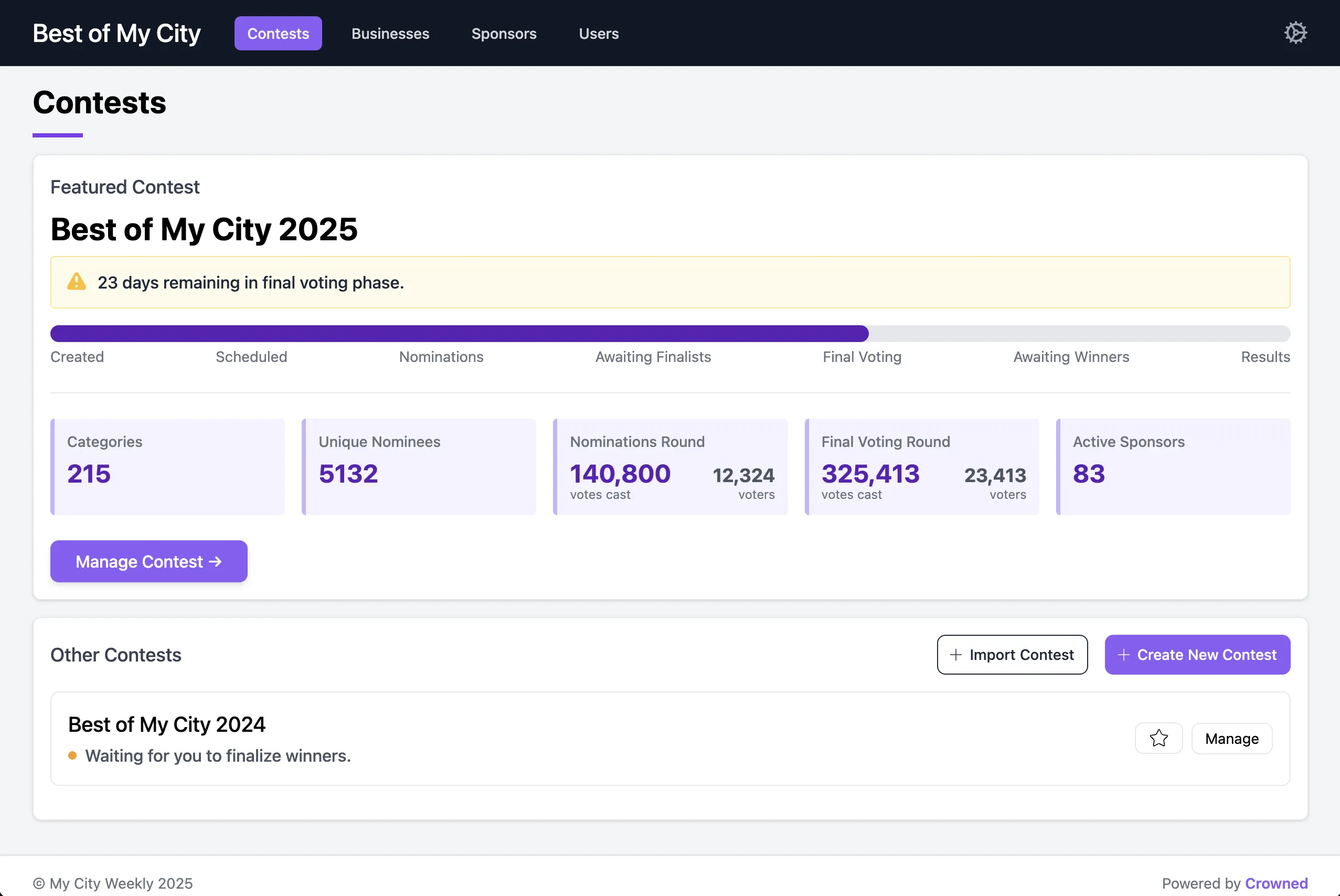
Your contest platform must talk to your existing tech stack. Verify that it integrates with your email marketing tool for automated follow-ups and your CRM for lead tracking. Seamless API connections or native integrations with tools like Mailchimp, Salesforce, or HubSpot are essential for professional workflows.
While software handles the digital workflow, having reliable physical tools for hybrid events or office-based judging panels can improve efficiency. Consider equipping your judging team with ergonomic supports and noise-canceling headphones to maintain focus during long review sessions.


As an Amazon Associate, we may earn from qualifying purchases.
Frequently asked questions about contest platforms
What are the best platforms for professional awards?
Judgify and Award Force are the top choices for professional awards. Judgify excels in abstract scoring and flexible rubrics, while Award Force is preferred for large-scale competitions requiring strict audit trails and structured evaluation workflows.
Which platform is best for marketing-led UGC contests?
Launchpad6 is the leading platform for user-generated content (UGC) campaigns. It focuses on engagement metrics and voting mechanics, making it ideal for brands that want to activate their audience while running a competition.
How do I ensure blind judging on a platform?
Look for platforms that explicitly support "blind judging" modes. This feature hides entrant names, demographics, and institutional affiliations from judges during the review phase. Both Judgify and Award Force offer this functionality to prevent bias based on identity rather than merit.
Can I integrate contest results with my CRM?
Yes, most professional platforms like ShortStack, Gleam, and Launchpad6 offer native integrations or APIs to connect with CRMs like Salesforce or HubSpot. This allows you to automatically sync winner data and lead information for follow-up marketing campaigns.
No comments yet. Be the first to share your thoughts!